
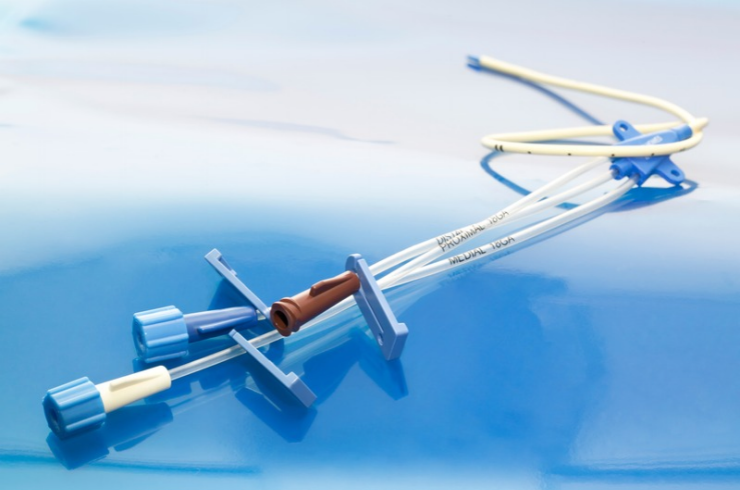
Central venous access is a specialised medical procedure that involves placing a catheter into a large vein to provide reliable access to the bloodstream. It may be required when patients need certain medications, intravenous fluids, nutritional support, or treatments that cannot be conveniently administered through a regular peripheral vein. Central venous access can also be used for selected forms of clinical monitoring, depending on the patient’s condition and treatment requirements.
At Parwarish Clinic, central venous catheterisation is listed among the specialised medical services. The decision to place a central venous catheter depends on the patient’s medical needs, the expected duration of treatment, available alternatives, and the treating team’s assessment. The procedure requires trained healthcare professionals, sterile techniques, appropriate equipment, and a suitable clinical setting.
A central venous catheter is a flexible tube inserted into a large vein, commonly in the neck, chest, or groin, depending on the patient’s condition and the type of access required. The catheter allows healthcare professionals to administer selected treatments through a reliable intravenous route.
Central venous access may be considered for several clinical reasons, including:
Medication Administration: Delivering specific medications that require central venous access.
Intravenous Fluids: Providing fluids when central access is clinically appropriate.
Nutritional Support: Administering specialised intravenous nutrition when indicated.
Longer-Term Treatment: Supporting selected treatment plans that require reliable venous access.
Clinical Monitoring: Providing access for certain forms of haemodynamic monitoring in appropriate settings.
The choice of catheter depends on the patient’s age, health condition, treatment plan, and anticipated duration of access.
Before the procedure, healthcare professionals review the patient’s medical history, assess the need for central access, and identify an appropriate insertion site. Ultrasound guidance may be used to help locate the vein and support accurate catheter placement.
The procedure is performed using sterile precautions to reduce the risk of infection and other complications. Following insertion, the catheter’s position and function are assessed using appropriate methods before it is used for treatment.
Central venous catheters require careful maintenance to reduce the risk of infection, bleeding, blockage, and catheter-related complications. Healthcare professionals monitor the insertion site and provide instructions for catheter care.
Parents and caregivers should report fever, redness, swelling, pain, discharge, or catheter displacement promptly.
Central venous access in newborns and children requires particular attention to catheter size, insertion technique, and monitoring. The procedure should be performed by appropriately trained professionals in a suitably equipped clinical facility.
Parwarish Clinic lists central venous catheterisation among its specialised services. Please confirm procedural availability and the appropriate treatment setting before visiting.