
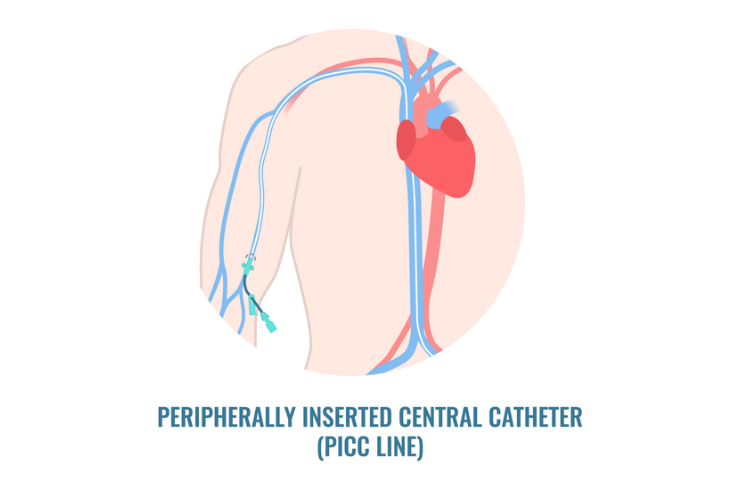
PICC line insertion, also known as Peripherally Inserted Central Catheter insertion, is a medical procedure used to establish reliable venous access for patients who require intravenous treatment over an extended period. A PICC line is a thin, flexible tube inserted through a vein in the arm and advanced until its tip reaches a large vein near the heart. It allows prescribed medications and fluids to be administered without repeatedly inserting a needle into smaller veins.
PICC line insertion may be considered for newborns, infants, children, and other patients when their medical condition requires sustained intravenous access. The decision to use a PICC line depends on the patient’s age, diagnosis, treatment plan, vein condition, and overall clinical needs.
A PICC line may be recommended when conventional intravenous access is difficult or unsuitable for the duration of treatment. Depending on the clinical assessment, its uses may include:
Extended intravenous medication: For administering prescribed medicines over a prolonged period.
Nutritional support: When specialised intravenous nutrition is required and clinically appropriate.
Repeated blood sampling: In selected cases where the catheter type and clinical protocol permit blood collection.
Difficult venous access: When repeated attempts to establish a peripheral IV line may be challenging.
Specialised hospital care: For patients who need dependable vascular access during ongoing treatment.
In newborns and children, the need for a PICC line is carefully evaluated to ensure that its potential benefits outweigh the associated risks.
PICC line insertion is performed by appropriately trained healthcare professionals using sterile techniques. The procedure generally involves assessing the patient’s condition, selecting a suitable vein, preparing the insertion site, and placing the catheter carefully. Ultrasound guidance or other appropriate techniques may be used to support accurate placement.
The catheter tip position must be confirmed according to the applicable clinical protocol before the line is used. The insertion site is secured and covered with a sterile dressing, and the healthcare team provides instructions for ongoing catheter care.
Although PICC lines can provide valuable venous access, possible complications include infection, bleeding, vein irritation, blood clots, catheter blockage, and displacement. Careful insertion, appropriate tip confirmation, regular monitoring, and proper maintenance help reduce these risks.
Parents and caregivers should follow the medical team’s instructions for keeping the dressing clean and dry, protecting the line, and attending scheduled reviews. Fever, redness, swelling, pain, leakage, or difficulty flushing the line should be reported promptly. Sudden breathing difficulty, chest pain, or significant swelling requires urgent medical assessment.
PICC line insertion in newborns and children requires age-appropriate assessment, careful handling, and close monitoring. The choice of catheter and insertion approach depends on the child’s size, clinical condition, and treatment requirements.
At Parwarish Clinic, families can enquire about PICC line insertion and related pediatric care. As this is a specialised procedure that may require a hospital setting, please confirm availability, the appropriate treatment facility, and referral arrangements before planning the procedure.